Edinburgh Castle is an historic
fortress which dominates the city skyline from its position on the Castle Rock in the centre of the city.
Archaeologists have established human occupation of the rock since at least the
Iron Age (2nd century AD).

The
castle stands upon the plug of an extinct volcano, which is estimated to have
risen about 350 million years ago during the lower Carboniferous period. The
Castle Rock is the remains of a volcanic pipe, which cut through the
surrounding sedimentary rock before cooling to form very hard dolerite, a type
of basalt.

Seen from every angle throughout the city and surrounding suburbs, the Castle is an imposing reminder of Scoland's history.

The
summit of the Castle Rock is 130 metres above sea level, with rocky cliffs to
the south, west and north, rising to a height of 80 metres (260 ft) above the
surrounding landscape. This means that the only readily accessible route to the
castle lies to the east, where the ridge slopes more gently. The defensive
advantage of such a site is self-evident, but the geology of the rock also
presents difficulties, since basalt is extremely impermeable.

There
has been a royal castle on the rock since at least the reign of David I in the
12th century, and the site continued to be a royal residence until 1633.

In
1561 the Catholic Mary, Queen of Scots, returned from France to begin her
reign, which was marred by crises and quarrels amongst the powerful Protestant
Scottish nobility.

In
1565, the Queen made an unpopular marriage with Henry Stuart, Lord Darnley, and
the following year, in a small room of the Palace at Edinburgh Castle, she gave
birth to their son James, who would later be King of both Scotland and England.
Mary's
reign was, however, brought to an abrupt end. Three months after the murder of
Darnley at Kirk o' Field in 1567, she married James Hepburn, 4th Earl of
Bothwell, one of the chief murder suspects. A large proportion of the nobility
rebelled, resulting ultimately in the imprisonment and forced abdication of
Mary at Loch Leven Castle. She escaped and fled to England and the crown was
bestowed on the head of the infant King James VI.

The
castle is also the site of the Scottish National War Memorial and the National
War Museum of Scotland. The British Army is still responsible for some parts of
the castle, although its presence is now largely ceremonial and administrative.

The Great Hall

Few
of the present buildings pre-date the Lang Siege of the 16th century, when the
medieval defences were largely destroyed by artillery bombardment. The most
notable exceptions are St Margaret's Chapel from the early 12th century, which
is regarded as the oldest building in Edinburgh, the Royal Palace and the
early-16th-century Great Hall, although the interiors have been much altered
from the mid-Victorian period onwards.

As
one of the most important strongholds in the Kingdom of Scotland, Edinburgh
Castle was involved in many historical conflicts from the Wars of Scottish
Independence in the 14th century to the Jacobite Rising of 1745. Research
undertaken in 2014 identified 26 sieges in its 1100-year-old history, giving it
a claim to having been "the most
besieged place in Great Britain and one of the most attacked in the world".

Graves of dogs that have resided within the Castle ...

Leaving the Castle walls

and negotiating my way down the Royal Mile

to the gates of the Palace of Holyroodhouse

The Palace of
Holyroodhouse is the official residence of the British
monarch in Scotland and is located at the bottom of the Royal Mile, at the
opposite end to Edinburgh Castle. The Palace has served as the principal
residence of the Kings and Queens of Scots since the 16th century, and is still
used as a setting for state occasions and official entertaining.

Queen
Elizabeth spends one week in residence at Holyrood Palace at the beginning of
each summer, where she carries out a range of official engagements and
ceremonies.

The
palace as it stands today was built between 1671-1678 designed by Sir William
Bruce. The plain Doric order is used for the services at ground floor, the
Ionic order is used for the state apartments on the first floor while the
elaborate Corinthian order is used for the royal apartments on the second
floor.

The 16th century Historic Apartments of Mary, Queen of Scots and the State Apartments, used for official and state entertaining, are open to the public throughout the year, except when members of the Royal Family are in residence.

The
palace has seen many monarchs come and go and changes in layout and function.
And the occasional occupation and looting by opposing forces – including
in 1650, either by accident or design, when the
east range of the palace was set on fire during its occupation by Oliver
Cromwell's soldiers.


The
Great Gallery, the largest room in the palace, is decorated with 110 portraits
of the Scottish monarchs, beginning with the legendary Fergus I, who supposedly
ruled from 330 BC. The portraits were all completed between 1684 and 1686 by
Jacob de Wet II.
After
1707, Scotland's representative peers were elected here to be sent to
Westminster. Bonnie Prince Charlie held evening balls in the gallery during his
brief occupation, and it later became a Catholic chapel for the Comte d'Artois.
Today it is used for large functions including investitures and banquets.

Mary Queen of Scots still in residence

The
roof of the abbey church - ajoining the Palace - collapsed in 1768 ...

leaving it as it currently stands ...

Back stairs for paramours on the run ...

The gardens of the
palace extend to some 10 acres (4.0 ha) ...

set within the much larger Holyrood
Park ...

which includes
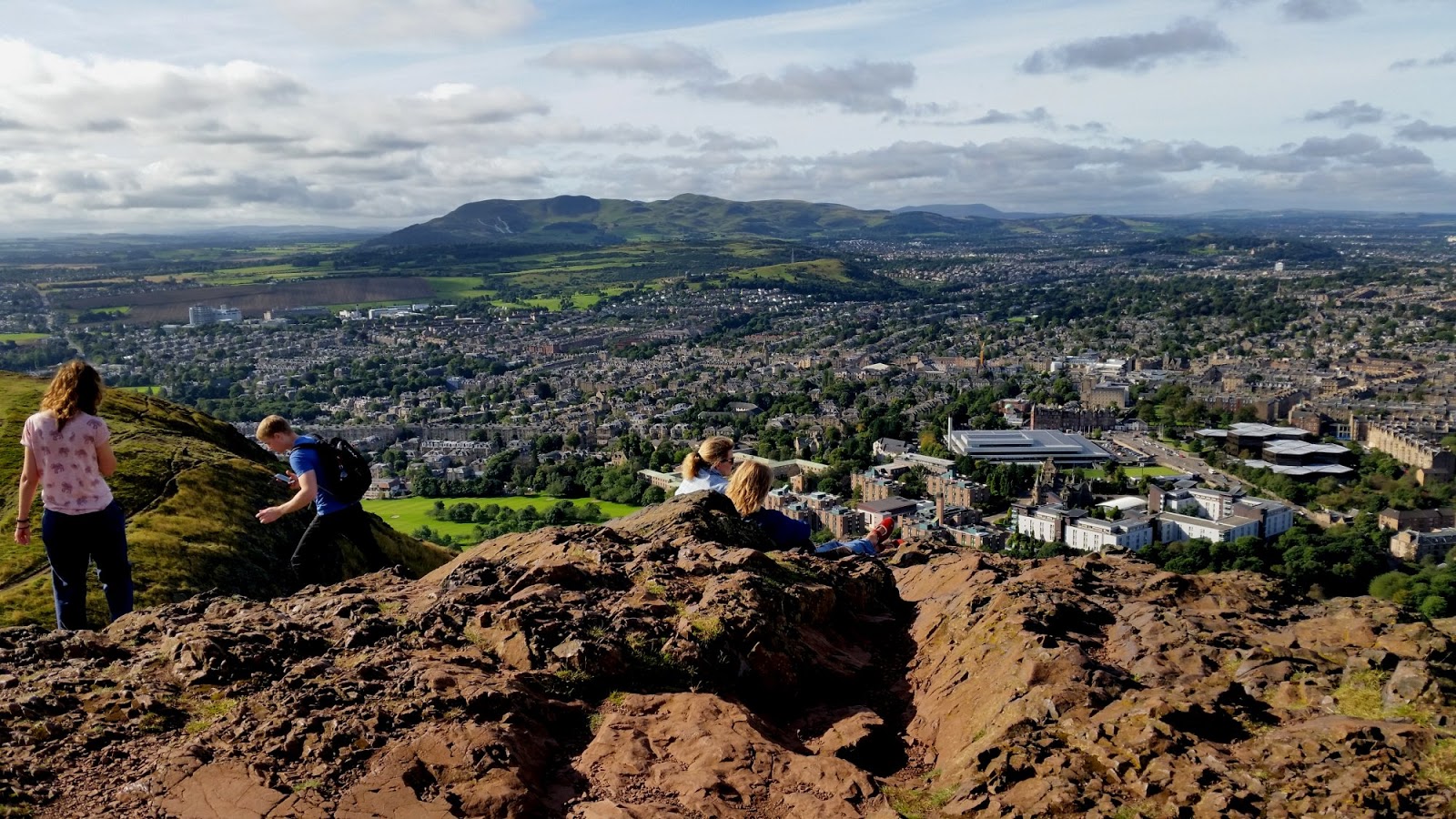
Arthur’s Seat to the west.

Attached to the palace is the Queen's Gallery ...

housing an exhibition of artworks from the royal collection ...


Although what looked like the royal standard was flying, I don't think any of the Windsor clan were in residence ...
An interesting delve into the history books ...
Next I'll take you on a tour of the magnificent Portraits Gallery ... hope you can join me ...